

Table of Contents
- Why Standard Sleep Masks Fail Side Sleepers
- 3D Memory Foam Sleep Mask Benefits for Side Sleepers
- How to Choose a Sleep Mask for Side Sleeping
- Sleep Mask Pressure on Eyes: What to Avoid
- Skin and Hair Health: The Hidden Impact of Sleep Masks
- CPAP Compatibility and Travel-Ready Options
- Conclusion: Finding Your Best Sleep Mask for Side Sleepers
- Frequently Asked Questions
Last Updated: September 25, 2026
Why Standard Sleep Masks Fail Side Sleepers
A standard flat sleep mask is built for a person who sleeps on their back, and that is the core problem. When you sleep on your side, your face presses directly into the pillow, and a flat mask has nowhere to go. This guide from Keith Lambert Co. breaks down what actually works for side sleepers.
3D Memory Foam Sleep Mask Benefits for Side Sleepers
A 3D memory foam sleep mask solves the side-sleeper problem by creating a recessed cavity around the eyes. The foam holds its shape against the pillow instead of collapsing into your face. That single design change is what separates a mask you tolerate from one you forget you are wearing.
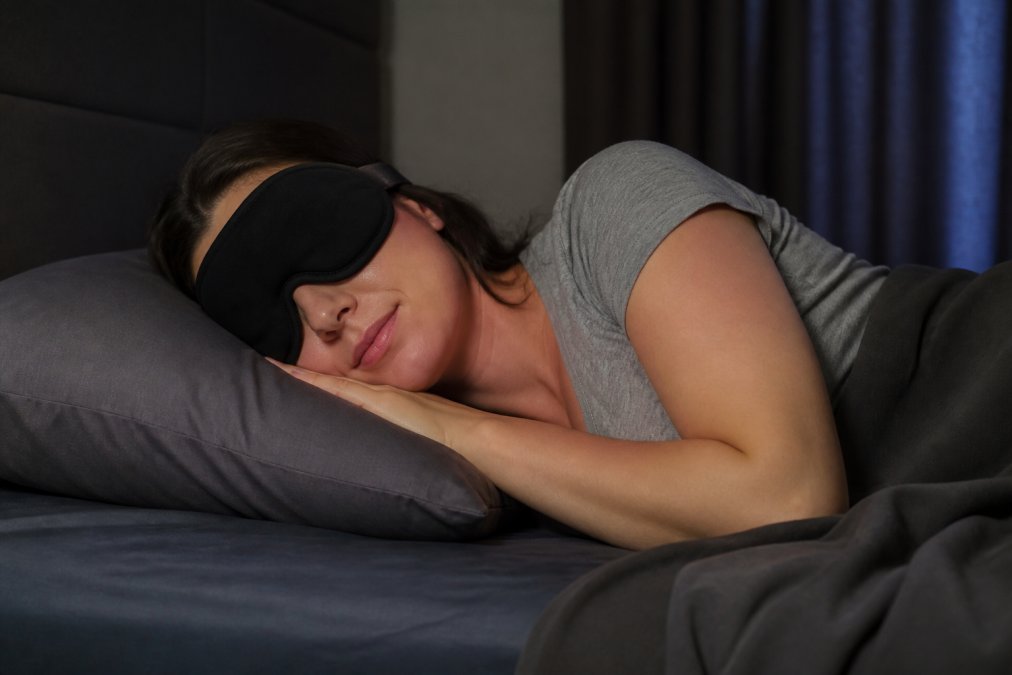
The benefits stack up quickly:
- Zero eye pressure: the contoured cavity means nothing touches your eyelids
- Stay-put design: memory foam molds to your face and resists shifting when you roll
- Total blackout: a molded nose bridge blocks light leakage at the edges
- Breathable comfort: the foam does not trap heat the way flat fabric does
Zero Eye Pressure and Contoured Design
Zero eye pressure is the feature side sleepers notice first. A contoured mask keeps the fabric off your eyelids entirely, so blinking and eye movement happen freely. This matters for the REM cycle, since eye movement is part of healthy REM sleep. A mask that presses on your eyes can interrupt that stage.
How to Choose a Sleep Mask for Side Sleeping
Knowing how to choose a sleep mask for side sleeping comes down to five checks: shape, strap, material, nose bridge, and fit. Run every mask through these before you buy.
| Feature | What to Look For | Why It Matters |
|---|---|---|
| Shape | Contoured 3D cavity at least 0.5 in deep | Keeps eyelid and lashes off the fabric so pressure never builds |
| Strap | Adjustable, cushioned, wide (0.75-1 in) | Spreads tension so it will not dig in or slide when you roll |
| Material | Silk, cotton, or breathable foam with a smooth cover | Balances heat, friction, and skin contact |
| Nose bridge | Molded, flexible, low-profile | Seals light without digging into the cheekbone when you turn |
| Fit | Snug but not tight; no gap at the temples | Loose masks leak light, tight masks leave marks |
Shape: Why Cavity Depth Beats Padding Thickness
A contoured mask only works if the cavity is deep enough to clear your eyelashes and eyelid when your face is pressed into a pillow. A shallow dome collapses under pillow weight and behaves like a flat mask. When you shop, look for a stated cavity depth or a rigid outer shell that holds its shape.
Strap: Width, Attachment Point, and Closure Type
An adjustable strap is non-negotiable for side sleepers. A fixed elastic band either cuts into your head or slides off during the night. Three details matter more than the marketing copy:
- Width. A strap under about 0.5 in concentrates pressure on a narrow band of skin and hair. Wider straps spread the load.
- Attachment point. Straps that anchor at the sides of the mask, rather than the top corners, sit lower on the head and stay put when you turn.
- Closure. Hook-and-loop (Velcro) adjusts fast but can snag hair and lose grip over time. A sliding buckle or elastic-and-toggle setup is gentler on hair but takes longer to dial in.
Material: Silk vs. Cotton vs. Foam
Each material trades off differently for a side sleeper:
- Mulberry silk is smooth and low-friction, which reduces hair breakage and skin drag, but it is the least effective at blocking light on its own and needs gentle washing.
- Cotton breathes well and is easy to clean, but it creases against a pillow and can wick moisture into the eye area.
- Memory foam holds a contoured shape and blocks light best, but it runs warmer and needs a breathable cover to avoid trapping heat.
Most side sleepers land on a foam core with a silk or smooth synthetic cover, the foam provides the cavity, the cover handles skin and hair contact.
Nose Bridge: The Most Overlooked Fit Point
The nose bridge is where most masks leak. A rigid bridge digs into the cheekbone when you roll onto that side; a bridge with too much give lets light in around the nose. Look for a molded, flexible bridge that seals the gap without pressing. If you wear glasses or have a prominent nose bridge, test this area first, it is the single most common reason a side-sleeper mask gets returned.
Fit: How to Measure and Test Before You Commit
Measure your head circumference just above the ears and across the forehead. A mask that fits loosely will leak peripheral light; one that fits too tight will leave strap marks. The right fit sits flush without pressing. Once it arrives, do a five-minute side test: lie on each side in a dark room and check for light at the temples and nose.
Breathability and Temperature Regulation
Temperature regulation is an angle most reviews skip. Memory foam can run warm, so breathable fabric and ventilation channels matter. A mask that traps heat will wake you up. Look for lightweight, hypoallergenic materials that let air move while still blocking light. If you overheat easily, a silk-covered foam mask or a mask with mesh side panels will stay cooler than a solid foam block.
Sleep Mask Pressure on Eyes: What to Avoid
Sleep mask pressure on eyes is the most common complaint among side sleepers, and it is entirely avoidable. Pressure comes from two sources: a flat mask that folds into the eye, or a strap pulled too tight to compensate for a poor fit.
Avoid these mistakes:
- Buying a flat mask and hoping the strap will fix the fit
- Overtightening to stop light leakage instead of choosing a contoured design
- Ignoring face-down pressure, which flattens foam over time
- Choosing a mask with a rigid nose bridge that digs in when you roll
Skin and Hair Health: The Hidden Impact of Sleep Masks
Most guides ignore what a mask does to your skin and hair, and that is a real gap. For a side sleeper, the mask is not just resting on your face, it is being pressed between your skin and a pillow for six to eight hours a night. That constant pressure and friction is what drives the problems.
Why Side Sleepers Get More Skin Irritation
Three mechanisms do most of the damage:
- Occlusion. A mask that does not breathe traps sweat, oil, and warmth against your skin. That is the same environment that feeds acne mechanica, breakouts caused by friction and pressure rather than hormones (pubmed.ncbi.nlm.nih.gov).
- Friction. Every time you shift position, the mask drags across your forehead, cheekbones, and the bridge of your nose. Over a night, that micro-abrasion weakens the skin barrier.
- Pressure. Sustained pressure on the same spots, usually the cheekbone and temple on your sleeping side, can leave marks that last past breakfast and, over months, contribute to sleep creases.
If you already have sensitive or acne-prone skin, the fix is a smooth, breathable cover and a mask that stays put so it is not sliding and re-abrading the same area all night.
Hair Breakage and Strap Friction
Long-haired side sleepers deal with a problem back sleepers rarely notice: the strap sits right where your hair meets your pillow, so every turn pulls against the hairline. Two things make it worse, a narrow strap that concentrates tension, and a hook-and-loop closure that catches strands. A wide, smooth strap and a sliding or toggle closure reduce the pull.
Materials That Help vs. Materials That Hurt
For hypoallergenic comfort, look for soft-touch materials like mulberry silk or smooth foam covers. Silk's low friction is the main reason it is recommended for hair and skin, it lets the mask glide instead of grab. Cotton is breathable but creases and can feel rougher against the face. Synthetic satins vary widely; some are smooth, some pill after a few washes and become abrasive.
Cleaning: What Actually Removes Oil and Bacteria
Skin and hair problems compound when the mask itself is dirty. A mask worn nightly picks up facial oil, skincare residue, and dead skin cells. Hand-wash in cool water with a gentle, fragrance-free detergent, rinse thoroughly, and air-dry flat so the foam keeps its shape. If you have acne-prone or sensitive skin, wash every two to three nights rather than weekly, and keep a second mask on rotation so one is always dry.
CPAP Compatibility and Travel-Ready Options
CPAP compatibility is where many masks fall short. A mask that conflicts with your CPAP headgear will not stay sealed, and a leaking mask defeats the purpose of therapy. Look for a low-profile design that sits below the eye line and does not compete with your tubing.
Conclusion: Finding Your Best Sleep Mask for Side Sleepers
The best sleep mask for side sleepers is contoured, adjustable, breathable, and built to stay put when you roll. Flat masks fight your sleep position. A 3D memory foam design works with it, keeping pressure off your eyes and light out of your nighttime routine.
Frequently Asked Questions
Do sleep masks work for side sleepers?
Yes, but only if the mask is designed for side sleeping. Flat masks shift and leak light when you turn onto your side. Contoured 3D masks with memory foam keep a seal around the nose bridge and stay in place, blocking peripheral light without pressing on your eyes. The key is the shape and strap design, not just the fabric.
What is the best eye mask for side sleepers who move around at night?
Look for a contoured mask with an adjustable strap that wraps around the head rather than sitting on the ears. A stay-put design with cushioned memory foam holds its shape when you roll from side to side. Velcro-free straps reduce hair snagging and skin irritation. Breathable fabric like mulberry silk or moisture-wicking foam helps with temperature regulation for deeper sleep.
Which sleep mask doesn't put pressure on my eyes?
A 3D memory foam sleep mask with a contoured eye cavity is your best bet. Unlike flat masks that rest directly on the eyelids, a 3D design creates a hollow space over each eye, so there is zero eye pressure. This matters for REM sleep because pressure on the eyeball can cause micro-arousals and disrupt the REM cycle. Look for a cushioned, ergonomic shape.
How do I keep my sleep mask from falling off at night?
Choose a mask with an adjustable strap that fits your head circumference snugly but not tight. A strap that crosses at the back of the head or uses a wide, soft band distributes tension better than a thin elastic cord. Velcro-free options with a slide adjuster are less likely to loosen. If you have long hair, a strap that avoids friction will also prevent breakage.