

Table of Contents
- What to Look for in a Blackout Mask for Side Sleepers
- 3D Memory Foam Sleep Mask Benefits for Side Sleepers
- How to Choose a Sleep Mask for Side Sleeping
- Light-Blocking Effectiveness and Comfort Balance
- Maintaining Sleep Hygiene for Side Sleepers
- Durability and Long-Term Strap Performance
- Frequently Asked Questions
Last Updated: October 1, 2026
What to Look for in a Blackout Mask for Side Sleepers
Side sleepers face a unique challenge: traditional sleep masks often slip, create pressure points on the cheekbone, or let light leak in around the edges. Blackout masks side sleepers need solve these problems with contoured designs that conform to facial profiles without pressing on pressure-sensitive areas.
When evaluating a blackout mask for side sleeping, prioritize three core features: a 3D contoured design that creates a seal without flattening, an adjustable strap system that distributes pressure evenly and stays secure when you roll onto your side, and breathable memory foam padding that prevents heat buildup.

Light leakage is the biggest complaint among side sleepers. Even small gaps around the nose bridge or eye cups disrupt circadian rhythm and prevent deep sleep. A padded nose bridge is essential to block light from every angle, achieving near-total darkness in bright rooms or during daytime travel.
Comfort matters as much as light-blocking effectiveness. A mask that blocks 99% of light but creates pressure headaches will sit unused. Side sleepers need masks that allow natural blinking without resistance, won't tangle hair, and feel pressure-free after eight hours of wear.
3D Memory Foam Sleep Mask Benefits for Side Sleepers
The 3D memory foam design is a significant advancement for side sleepers. Contoured eye cups allow eyes to move freely without touching the mask material, eliminating the claustrophobic sensation many side sleepers experience.
Memory foam molds to your unique facial contours, adapting to your eye area, nose bridge, and cheekbones while reducing pressure points. Over time, the foam "remembers" your shape, delivering increasingly customized support.
The Keith Lambert Co. 3D Memory Foam Sleep Mask exemplifies this approach. It features soft memory foam that contours naturally around the eyes while maintaining a padded nose bridge to block light from every angle. The mask achieves 99.9% blackout capability, creating the total darkness your brain needs for deep, restorative sleep cycles.

Memory foam offers practical durability for side sleepers: heat-bonded with reinforced stitching, it maintains shape through hundreds of nights and machine-washable construction keeps it hygienic without degrading the foam.
How to Choose a Sleep Mask for Side Sleeping
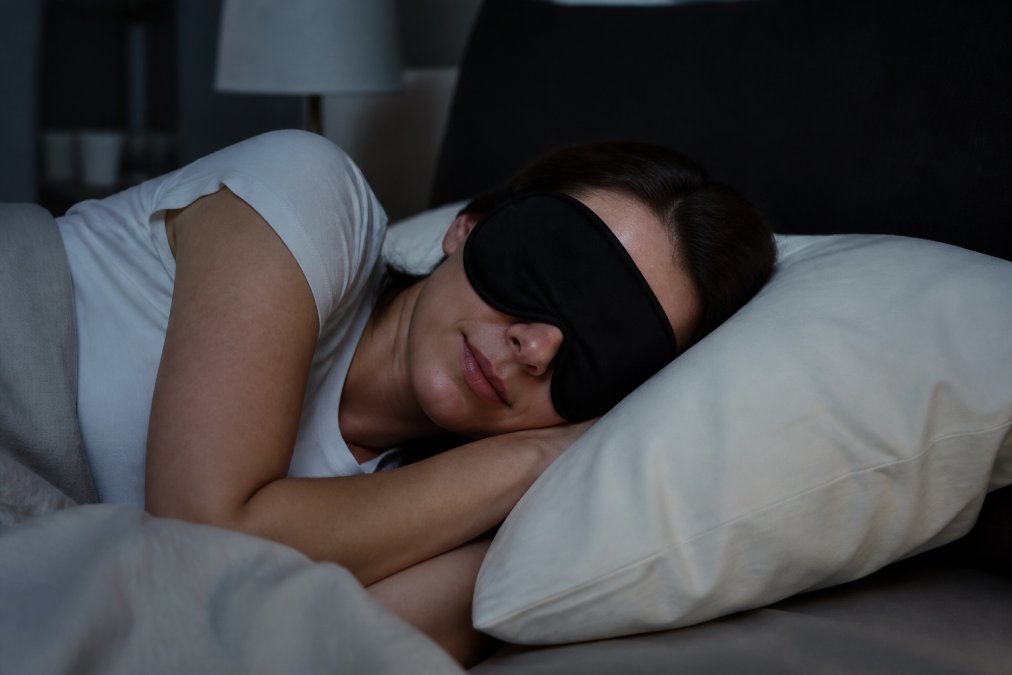
Selecting the right mask involves matching your sleep position, facial sensitivity, and sleep environment, particularly your pillow type, a critical factor that affects mask performance.
Pillow Compatibility for Side Sleepers
Your pillow choice directly affects mask performance. Memory foam pillows compress under side-sleeping pressure, potentially pushing eye cups into your eyes if the mask sits too low. Choose masks with taller 3D contours that maintain clearance when pillow compression occurs. Test the mask while lying on your side against your actual pillow.
Down and feather pillows compress unevenly, creating gaps where the mask meets the pillow edge and allowing light leakage. For down pillow sleepers, prioritize masks with extended padding along the bottom edge of the eye cups and a longer nose bridge to compensate for pillow-induced shifting.
Strap Design and Pressure Distribution
Test the strap design carefully. Flat, flexible straps distribute pressure more evenly than round elastic bands. The strap should fit securely with one finger fitting comfortably underneath. For side sleepers, strap attachment points matter critically: look for rear-only connections that reduce ear pressure when you roll onto your side, preventing localized discomfort.
Skin Sensitivity and Material Selection
If you have sensitive skin or experience acne, choose masks with hypoallergenic materials and breathable fabrics. Spandex Lycra fronts with memory foam backs offer moisture-wicking properties that prevent sweat accumulation, critical for side sleepers whose facial pressure concentration increases localized heat. Avoid heavy cheekbone padding if prone to facial irritation; pressure combined with moisture can trigger breakouts or contact dermatitis.
Nose Bridge Design and Light Seal
A padded, contoured nose bridge creates the seal that prevents light leakage, the most common complaint among blackout masks side sleepers. The padding should be substantial enough to block light but soft enough to avoid pressure discomfort. Test light blockage specifically in your side-sleeping position; many masks perform well when lying flat but fail when you turn onto your side.
Selection Criteria |
What Matters |
Why It Matters for Side Sleepers |
|---|---|---|
Strap Attachment |
Rear-only connection points |
Eliminates ear pressure during side sleeping |
Pillow Compatibility |
Tall 3D contours for memory foam; extended lower padding for down |
Maintains light seal and eye clearance with your specific pillow type |
Nose Bridge |
Padded, contoured, slightly extended |
Blocks light leakage; maintains seal when face shifts against pillow |
Material |
Memory foam + breathable front, hypoallergenic |
Adapts to facial shape; prevents skin irritation and acne |
Eye Cup Design |
3D contoured, not flat |
Allows blinking; eliminates claustrophobic feeling |
Adjustability |
Multiple size options with fine-tuning |
Accommodates various head sizes and facial profiles |
Light-Blocking Effectiveness and Comfort Balance
The best blackout masks for side sleepers balance light-blocking and comfort. Maximum darkness requires a tight seal, but excessive tightness causes headaches and pressure-point soreness.
3D Memory Foam Sleep Mask – 99.9% →
Effective masks concentrate padding at key seal points, the nose bridge, inner eye corners, and upper cheekbones, blocking light where it matters most while minimizing pressure on sensitive areas.
A 99.9% blackout rating indicates near-total light blockage. This level of darkness supports your circadian rhythm and initiates deep sleep stages.
Test light-blocking performance in your actual sleep position by lying on your side and checking for light leakage around the nose bridge, strap connection, and inner eye. The best designs maintain their seal regardless of sleep position.
Breathability prevents heat and moisture buildup that compromises comfort. Masks with moisture-wicking fabrics keep your skin dry without the clammy feeling of non-breathable materials, especially important for side sleepers whose facial pressure concentration increases localized heat.
Maintaining Sleep Hygiene for Side Sleepers
Sleep hygiene extends beyond wearing a blackout mask, it encompasses your entire sleep environment and routine. A quality mask becomes one tool in a comprehensive approach to restoring natural sleep signals.
Consistent sleep timing matters as much as darkness. Using a blackout mask every night trains your brain to recognize darkness as a sleep signal, strengthening your natural sleep response. Inconsistent use undermines this adaptation.
A cool bedroom (around 65-68°F) combined with breathable mask materials supports deeper sleep. Memory foam masks with moisture-wicking fronts manage heat better than solid, non-breathable alternatives.
Combine your blackout mask with complementary sleep aids for optimal results. The Keith Lambert Co. Sleep Sanctuary Kit pairs the 3D Memory Foam Sleep Mask with Sleep Peace earplugs (28dB noise reduction), addressing both light and noise disruptions.
Your sleep environment matters as much as individual products. Remove screens at least 30 minutes before bed, blue light suppresses melatonin production (The influence of blue light on sleep, performance and wellbeing in young adults). Keep your bedroom dark, quiet, and cool. Use blackout curtains alongside your sleep mask for maximum darkness.
Durability and Long-Term Strap Performance
Most sleep mask failures occur from strap degradation over months of nightly use: Velcro weakens, elastic loses elasticity, stitching separates, and padding flattens. Side sleepers experience accelerated wear because side pressure concentrates stress on strap connection points.
Understanding Strap Failure Timelines
Standard elastic straps typically lose 15-20% of their elasticity within 3-6 months of nightly use, becoming noticeably looser. By month 9-12, many masks become unwearable.
Construction Methods That Extend Durability
Maintenance Protocols for Extended Mask Life
Monthly Inspection Checklist for Side Sleepers
- Strap attachment points: Examine where the elastic connects to the eye cups. Look for loose stitching, material separation, or visible gaps. Gently tug on the strap, it should not move relative to the eye cup. If it does, the attachment is failing and the mask will soon become unwearable.
- Nose bridge integrity: Check for cracks, material separation, or flattening. Press gently on the nose bridge; it should spring back to shape. If it stays compressed, the foam is beginning to flatten and light-blocking effectiveness will degrade.
- Velcro grip strength: Test the Velcro by fastening and unfastening it 5-10 times. It should grip firmly each time. If grip noticeably weakens, the Velcro is degrading and will soon fail to hold the mask in place during side sleeping.
- Elastic elasticity: Hold the strap and gently stretch it. It should return to original length immediately. If it takes 2-3 seconds to return or doesn't fully return, elasticity is lost and the strap won't maintain tension.
- Seam integrity: Run your finger along all seams, particularly where the strap attaches. Feel for loose threads, gaps, or separation. Any visible separation means the seam is failing and will worsen rapidly.
When to Replace Your Mask
Frequently Asked Questions
What makes a blackout mask suitable for side sleepers?
Side sleepers need masks with contoured, pressure-free designs that don't dig into facial features when lying on their side. A 3D memory foam construction allows the eye cups to conform naturally around the eyes without pressing on pressure points. The adjustable strap should be flat and flexible to prevent slipping during side-sleeping movement. The padded nose bridge is critical—it blocks light leakage without restricting airflow or creating discomfort against the nose and cheekbones.
How does 3D memory foam in a sleep mask benefit side sleepers?
3D memory foam sleep mask benefits include ergonomic eye cup design that eliminates pressure on the eyes and surrounding facial areas. Unlike flat masks, contoured memory foam distributes weight evenly, preventing the claustrophobic feeling that can occur when side-sleeping with standard masks. The material allows natural blinking without resistance and adapts to individual facial profiles, making it ideal for those with sensitive skin or existing eye pressure concerns. Memory foam also maintains its shape through repeated use and washings.
Can a sleep mask actually improve sleep quality for side sleepers?
Yes. Blackout masks create total darkness, which supports your body's natural circadian rhythm and melatonin production. For side sleepers specifically, a properly fitted mask prevents light leakage that would otherwise enter from the sides during the sleeping position. This is especially valuable for shift workers, frequent travelers, and anyone in a bright bedroom environment.
What should I look for in adjustability and strap design for side sleeping?
Look for an extra-wide, flat strap that won't dig into the back of your head when side-sleeping. The strap should use flexible materials like spandex that won't tangle hair or create pressure points. Adjustability is crucial—the mask must stay secure without sliding or rotating when you shift positions during the night. Heat-bonded construction with reinforced stitching ensures the strap won't degrade over time. Test the strap tension; it should be snug enough to prevent light leakage but loose enough that you can fit a finger underneath comfortably.